
Cobb’s Engine House & Chimney
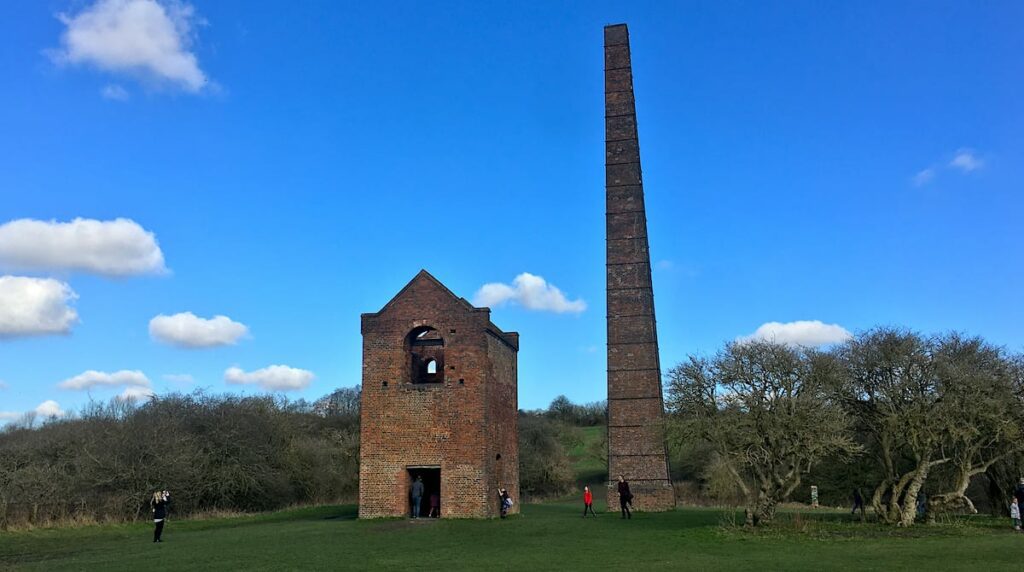
Cobb’s Engine House and Chimney, also known as Windmill End Pumping Station, housed a stationary Watt-type steam engine, which pumped water out of nearby mines for 97 years. It is the earliest surviving example of its type and one of the few engine houses left in the Black Country. It is located in the Bumble Hole and Warren Hall Local Nature Reserves, an area of open greenery and scenic views.
Key info
| Location | Warrens Hall Local Nature Reserve, Rowley Regis, B65 8NN |
| County | West Midlands |
| Completed | c. 1831 |
| Erected by | Sir Horace St Paul |
| Protection status | Scheduled Monument Listed Building Grade II |
Visiting guide
Open 24 / 7
Free entry
Free car park
What can I expect when visiting Cobb’s Engine House?
From the car park, walk up the steps past the Bumble Hole and Warrens Hall Local Nature Reserve Visitor Centre to the canal. Walk north along the canal and you’ll see the chimney of the engine house in the distance.
There is plenty of green space around the engine house that you can enjoy. You can walk inside the structure and inspect the surviving brickwork. There is a lightning conductor running down the chimney.
After inspecting the engine house, walk up the hill behind until you get to a bench. Turn around for a stunning view of the engine house and the southern area of the Black Country. In the distance are the Clent Hills.
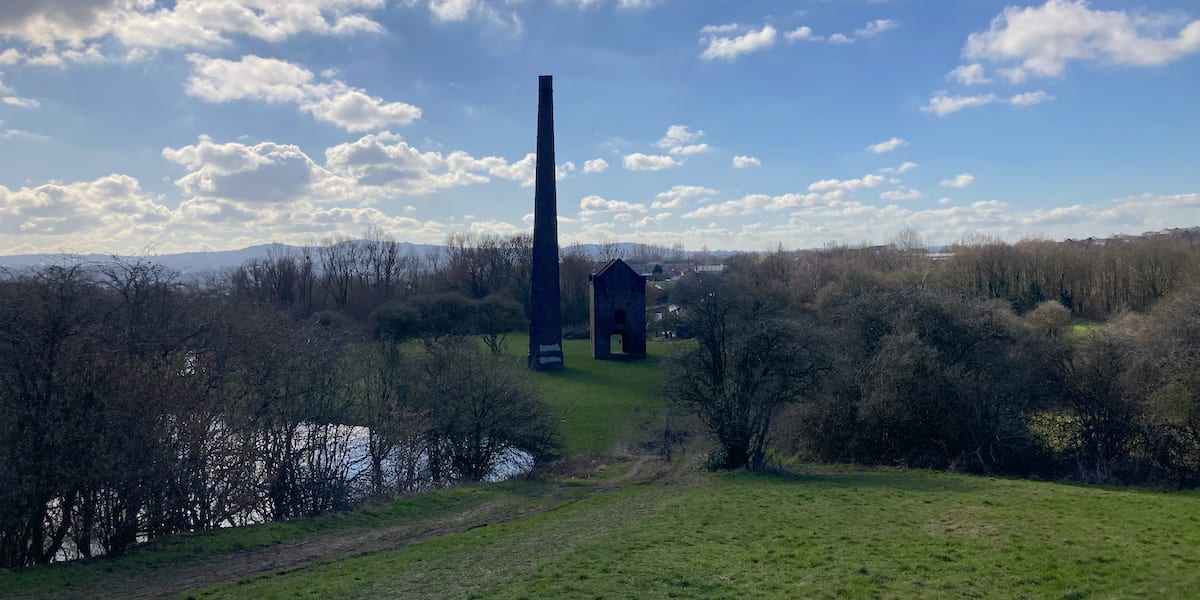
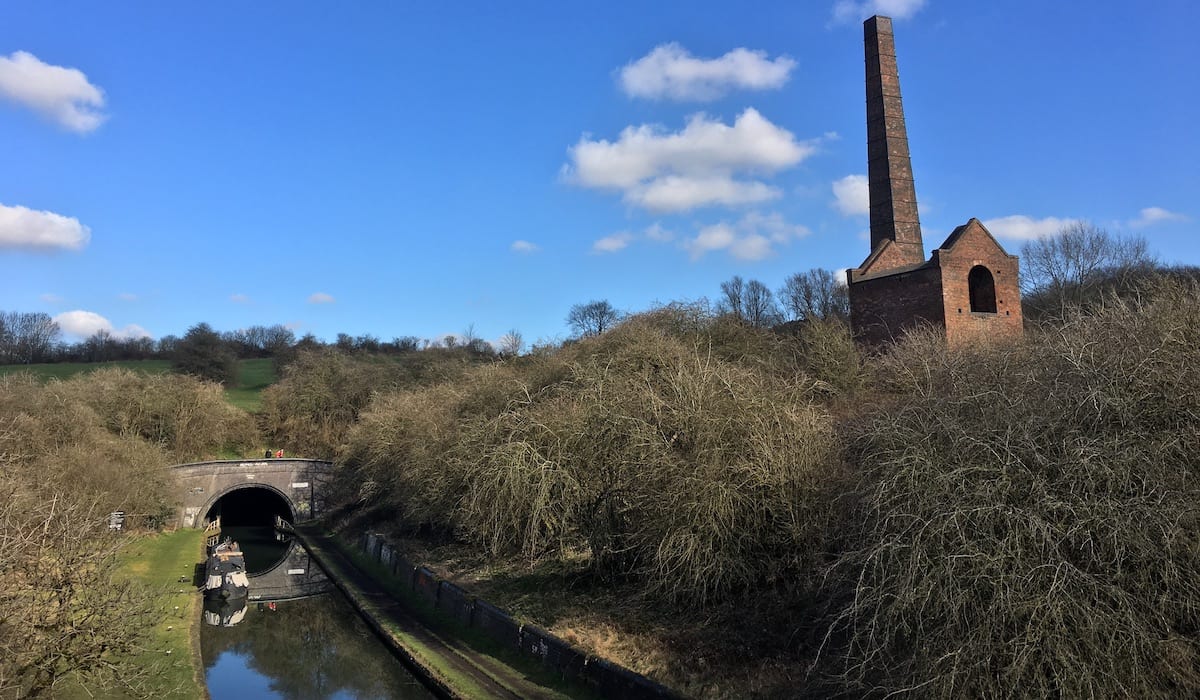
You now have the option to explore more of the surrounding Bumble Hole and Warrens Hall Locale Nature Reserves. It’s also worth seeing the Netherton Tunnel, which is located next to the engine house. You can get a great photo of the two attractions from the nearby bridge, which was used to carry a tramway that served the engine house.
You may wish to visit the engine house during the Black Country Boating Festival, which is held every September on the nearby canals at Windmill End Junction. It features a collection of historic narrowboats, stalls, real ale bar, and live music.
How long does it take to see Cobb’s Engine House?
It will take you 20 minutes to see the engine house and walk up the hill behind to get the best view of the attraction and surrounding areas. You can always extend your visit by exploring the surrounding Bumble Hole and Warrens Hall Locale Nature Reserves.
Is Cobb’s Engine House suitable for a picnic?
The engine house is located in the Bumble Hole and Warrens Hall Locale Nature Reserves. This green area is very suitable for a picnic, you may wish to choose a higher spot up the hill for a better view providing it’s not windy. Please take your litter home.
How do I get to Cobb’s Engine House?
Cobb’s Engine House is located in the suburbs of the Black Country. There are no nearby railway stations so it’s best to journey via car or taxi. If this is not possible, there are bus stops on St Peter’s Road nearby with services from Dudley.
History of Cobb’s Engine House
1798 – The Dudley Canal Line No. 2 is completed. It runs past the collieries in Netherton before connecting with the Worcester & Birmingham Canal at Selly Oak, Birmingham [1].
1830 – Windmill End Colliery No.3 pit is sunk most likely by the Earl of Dudley’s Mining Department next to the Dudley Canal Line No.2 near Netherton [2].
1831 – Due to water flooding the pit, an engine house was erected to house a Watt-type pumping steam engine, which pumped an average of 1.67 million litres (367,500 gallons) per day into the canal from a shaft measuring 525 ft deep [3]. The mine owners were paid at a rate of 4d (pre-decimal pennies) per lock-full by the canal company [2]. Some unverified sources report the engine house was named after Cobb, a farmer who worked the land before the mine pit was sunk.
1860s – The steam engine was re-cylindered and converted into the Cornish cycle. It worked during the 1870s for the Oldhill Mines Drainage Company [2]. It is thought to have delivered about 20 horsepower at a speed of 30 rpm [4].
1925 – The engine house and plant are closed after a lengthy series of miners strikes that culminated in the General Strike of 1926 [5].
1928 – The Newcomen winding engine, which was located next to Cobb’s Engine House was brought by Henry Ford, then dismantled and shipped to the Henry Ford Museum in Dearborn, Michigan where it stands to this day.
1969 – A photo is taken, which details the continuing decay of the engine house.
1972 – The engine house and chimney is listed as a Grade II structure [6].
1980s – The engine house and chimney are restored after fifty years of decay [2]. The structure is left roofless.
Architecture and dimensions
The engine house consisted originally of three storeys, with a cylinder floor at ground level, chamber floor above, and a bob or beam loft. The south gable wall is thicker than the others and has a plug rod portal on the ground floor, with a flat head, and a bob portal under the apex with a round arch.
The east and west walls both have a ground floor window with a segmental head. The north gable wall has a cylinder portal on the ground floor, an opening to the middle storey with a round head, and two smaller openings above. The boiler chimney tapers from 11′ 6″ square at the base to 4 feet at the top and is 95 feet high. Originally contained a single-acting condensing engine [6].
Sources
- Hadfield, C. (1985) The Canals of the West Midlands. Newton Abbot: David & Charles (Publishers) Limited.
- Chapman, N. (2011) South Staffordshire Coalfield. Stroud: Amberley Publishing.
- Dudley Council (2021) Bumble Hole and Warrens Hall Local Nature Reserves. Available at: https://www.dudley.gov.uk/things-to-do/nature-reserves/bumble-hole-and-warrens-hall-local-nature-reserves/ (Accessed: 28 February 2021).
- Nance, D. (1996) Beam Engines of The Henry Ford Collection. Available at: https://www.researchgate.net/publication/291166836_Beam_engines_of_the_Henry_Ford_Collection (Accessed: 28 February 2021).
- Collins, P. (2011) Black Country Canals. Stroud: The History Press.
- Historic England (2021) Cobbs Engine House and Chimney Warrens Hall Park. Available at: https://historicengland.org.uk/listing/the-list/list-entry/1229552 (Accessed: 28 February 2021).
 Elan Valley Dams & Reservoirs